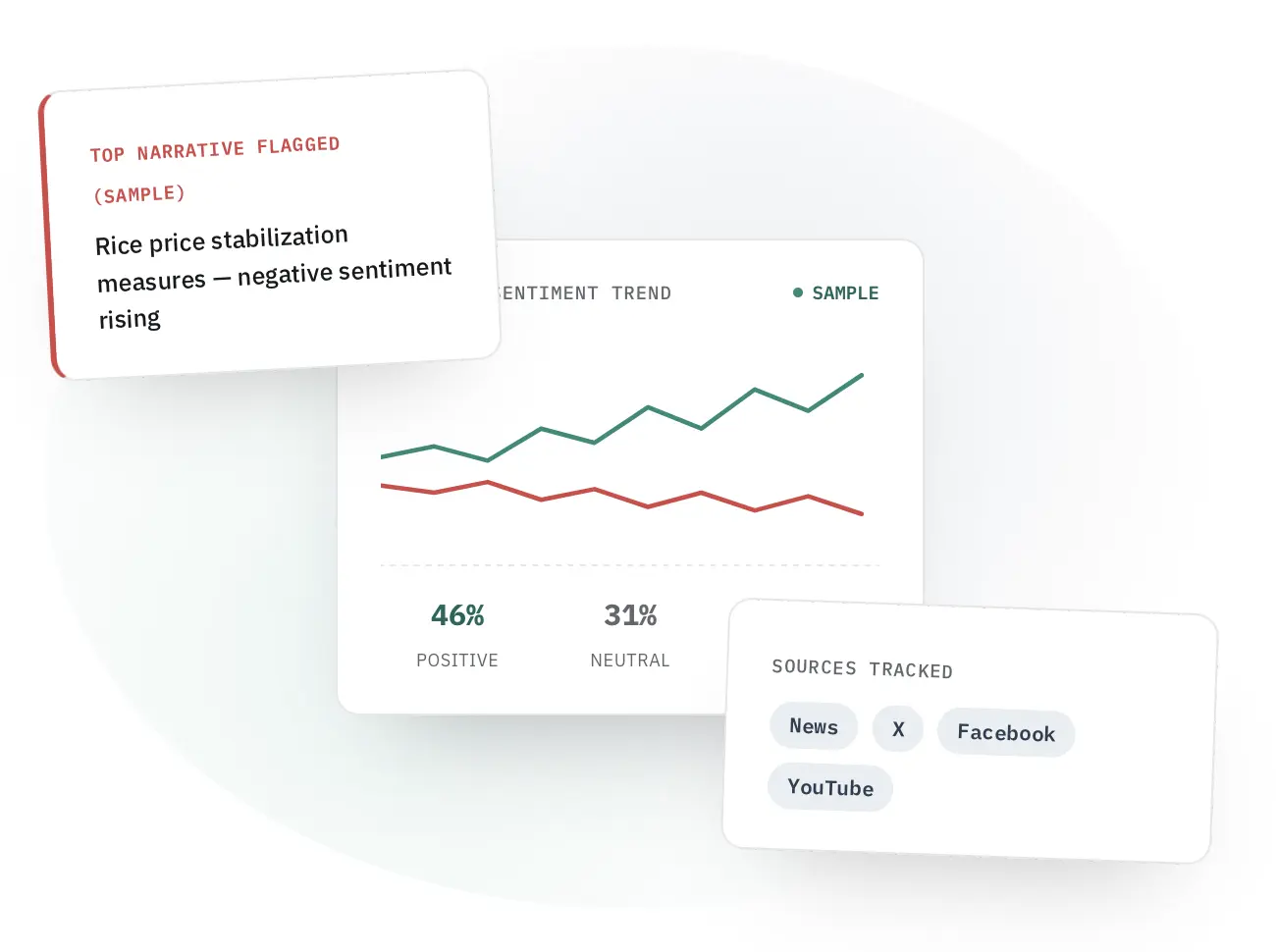
The Computational Research Laboratory (CRL) provides the computing infrastructure and research environment behind SSMIP — a program applying that infrastructure to continuous sentiment and media-intelligence monitoring.

Program Leader
Rigorous, face-to-face sampling. Only a snapshot at a fixed point in time.
Tracks sentiment in near real time. Reflects only the self-selected population online.
A single pipeline, calibrated against a national probability-sample survey — reflecting the actual national population, urban and rural, online and offline.
Through SSMIP, the Laboratory would provide the following standing services to government agencies and Congress, positioning it as a shared national facility rather than a single-client research contractor
Updated on a rolling basis, for partner agencies and congressional offices.
During emerging incidents or crises, on a timeline far shorter than a separately commissioned rapid survey.
Regular reports cross-checking digital sentiment trends against probability-sample survey data.
Flagging suspected inauthentic narrative campaigns for relevant agencies.
Published as a public good, supporting evidence-based national discourse.
For agency personnel interpreting sentiment and media-intelligence data.
Commissioned by individual agencies or committees, at a fraction of separately procured private-sector study costs.
Moving from periodic snapshots to continuous monitoring that can flag a reversal in public mood while it is still forming, rather than only after the next survey round confirms it.
Giving government communicators and researchers a defensible, data-grounded account of what is actually shifting opinion, rather than relying on anecdote or assumption.
Separating organic shifts in public sentiment from coordinated or inauthentic activity, which increasingly complicate any single-source reading of public opinion.
Developing a cadre of Filipino researchers and engineers fluent in both technical methods and substantive judgment — reducing dependence on foreign platforms and consultants for a function central to national decision-making.
Consolidating a function currently fragmented across multiple agencies into a single shared facility.
A Philippine-owned, domestically hosted pipeline, reducing reliance on foreign commercial platforms priced in foreign currency.
Continuous, near-real-time detection of shifts around security-sensitive issues, at a fraction of ad hoc rapid-survey cost.
A standing technical capacity to detect coordinated inauthentic activity and foreign information operations.
Fusing digital monitoring with probability-sample survey data so findings reflect the actual national population.
Consolidating survey work, media monitoring, and threat intelligence — currently fragmented across agencies — into one facility.
Training and retaining Filipino researchers and engineers in applied NLP, ML, and data science.
Publishing regular, methodologically transparent sentiment reports as a credible, non-partisan public good.
A proof-of-concept that can inform future national data infrastructure — disaster response, health surveillance, economic monitoring.
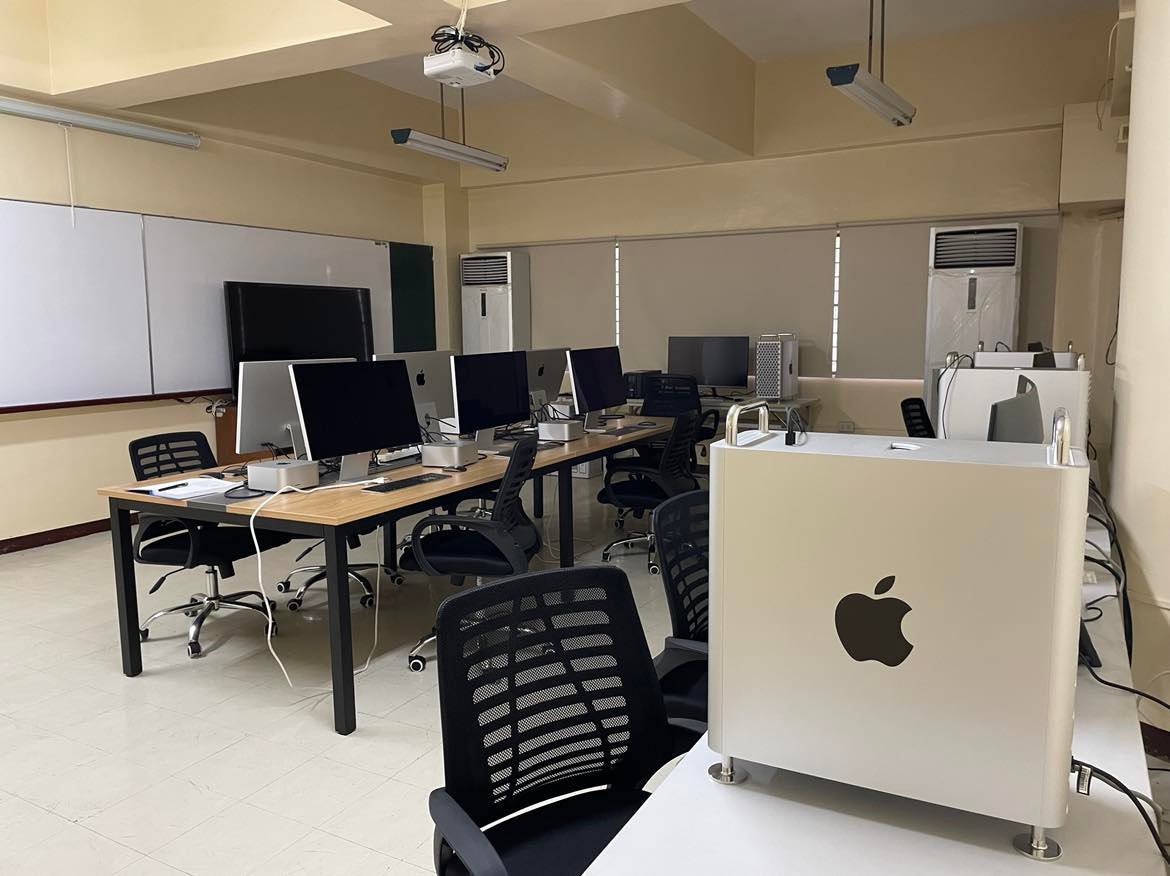
The CRL is a technical facility at the UP Institute of Mathematics, Diliman, supporting applied and computational mathematics research. SSMIP is housed within this public academic institution — providing the computing infrastructure, research environment, and methodological independence the program depends on, rather than routing a function central to national decision-making through a private commercial vendor.